
The Truth About Side Planks and Scoliosis: Powerful Tool or Potential Pitfall?
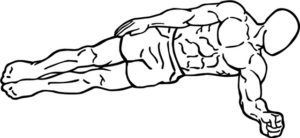
Side planks are some of my favorite poses to teach in yoga, and if you’ve spent any time researching scoliosis-specific exercises, chances are you’ve come across side planks.
Often praised for the ability to strengthen spinal stabilizers and even reduce spinal curvature in some cases, the side plank has become a go-to recommendation in scoliosis fitness circles.
But like everything in scoliosis treatment, it’s not that simple. While side planks can offer value, they’re not a one-size-fits-all solution—and in some cases, they can actually reinforce imbalances rather than correct them.
Let’s unpack the promise and the potential problems of side planks for scoliosis.
Why Side Planks Are Popular in Scoliosis Training
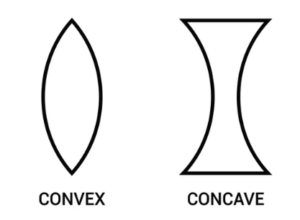
In a 2014 study published in Global Advances in Health and Medicine, researchers found that holding a modified side plank on the convex side of a lumbar curve helped reduce the Cobb angle in a small group of adolescents and young adults.
That study brought attention to a simple idea: strengthening the muscles on the weaker side of a curve may help restore spinal balance.
Side planks target:
- Quadratus lumborum
- Obliques
- Transverse abdominis
- Gluteus medius and minimus
That covers three of the four abdominal muscles and the QL, a side-bending muscle that is also a stabilizer of the ribcage and pelvis.
All of these muscles play a role in lateral stability and spinal alignment, especially in the lumbar and lower thoracic regions. For someone with a single lumbar curve, a side plank on the convex (outer) side might help draw the spine toward the midline.
Sounds great, right? But here’s the catch…
Scoliosis Is Not Symmetrical—And Neither Are Its Solutions
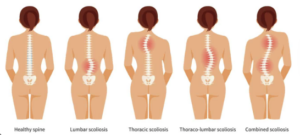
Scoliosis isn’t just a side bend; it involves lateral curvature, spinal rotation, and changes in muscle tone and tension on both sides of the body. That means the “strong side” vs. “weak side” approach doesn’t always apply in a straightforward way.
For example:
- A person with a double major curve (one thoracic, one lumbar) has a complex pattern of asymmetries. A side plank on one curve might help, but worsen compensation in the other.
- A thoracic curve might not benefit as much from a lumbar-focused side plank.
- Some people with scoliosis are already overly tight or compressed on the side targeted by the plank, making that side more dominant.
Simply put: without understanding the curve pattern and underlying muscle imbalances, side planks can backfire.
When Side Planks Can Be Counterproductive
There are a few scenarios where side planks may do more harm than good:
- Reinforcing compensatory patterns if done on the wrong side
- Overloading the QL (quadratus lumborum), which is often already overactive in scoliosis
- Ignoring rotation, a key component in all scoliotic curves
- Compressing the spine if not properly modified or aligned
That’s why any scoliosis exercise—no matter how well-researched—should be individualized.
Smarter Variations for Side Planks and Scoliosis
As a generic exercise, side planks can be very helpful in building core strength and improving postural awareness. And this goes for people with scoliosis as well.
I teach both straight arm side planks (vasisthasana) and forearm side planks. They are interchangeable with the instructions below.
The key for making side planks a scoliosis specific exercise is modification and purpose. Here are a few scoliosis-friendly versions. All of these variations are also great for those without scoliosis:
1. Supported Side Plank (Forearm and Bottom Knee Down)
- Ideal for beginners or those with instability
- Allows focus on alignment without overloading the spine
- Lie on your side with your bottom forearm resting on the ground, your elbow directly beneath your shoulder, and your knees on the ground and bent so your feet are in line with your hips. You can rest your top hand on your top hip or place it in front of you for additional stability.
- Engage your core and lift your hips. Exhale as you slowly lift your hips up, forming a straight line from your head to your knees. Avoid sagging your hips or twisting your body.
- Unsupported Side Plank
- Lie on your side with your bottom forearm resting on the ground, your elbow directly beneath your shoulder, and your legs on the ground so your feet are in line with your knees and hips. You can rest your top hand on your top hip or place it in front of you for additional stability.
- Engage your core and lift your hips, this time taking the whole leg off the ground resting on the outer foot. The ankle bone should be off the ground as well. Avoid sagging your hips or twisting your body.
3. Convex Side Plank with Thoracic Rotation
- Adds a gentle spiral to address rotational component
- Can be done dynamically, lifting and lowering the top arm with breath
- Lie on your right side, supporting your body weight on your forearm (elbow directly below the shoulder) and the side of your foot. Ensure your body forms a straight line from head to feet, and your hips are stacked.
- Lift your hips, making sure to lift the ankle bone up as well.
- Reach your left arm towards the ceiling, then rotate your torso, bringing your left arm under your body, and the left shoulder as close to the floor as possible, as if threading it through a needle.
- Slowly rotate back to the starting position, keeping your core engaged and hips stable.
- Repeat for the desired number of reps.
4. Side Plank Lifts or Dips
- Small lifts of the hips engage lateral stabilizers without static fatigue
- Helps develop endurance and neuromuscular control
- Lie on your right side, supporting your body weight on your forearm (elbow directly below the shoulder) and the side of your foot. Ensure your body forms a straight line from head to feet, and your hips are stacked.
- Lift your hips, making sure to lift the ankle bone up as well.
- Lower your hips straight down about six inches, and back up. You can lower more if you want, or are able.
- Repeat for the desired number of reps.
5. Wall-Assisted Side Plank
- Performing a side plank with the feet or back touching a wall can promote better alignment and body awareness
- Follow the instructions for any of the above variations but with the support of the wall.
These are only a few of many options. You can lift the top leg off the bottom leg, you can move that lifted leg up and down, forward and back, and any which way you would like. You can also invent your own variations and apply them to your understanding of your curve.
Important: Always consult with a scoliosis-informed practitioner to determine which side and variation is appropriate for your curve.
Side planks can absolutely be a valuable tool in the scoliosis exercise toolbox—but only when used with precision, understanding, and purpose.
There is no universal answer in scoliosis treatment. What helps one person might hurt another. That’s why protocols must be tailored, adaptive, and sensitive to the entire pattern of spinal curvature, rotation, and compensation.
If you’re curious about adding side planks to your scoliosis routine, work with someone trained in scoliosis-specific movement methods. The goal isn’t just strength—it’s balance, awareness, and long-term spinal health.