
The Schroth Method for Scoliosis: Reshaping the Spine Through Breath and Movement
 Scoliosis is often viewed as a structural problem requiring structural solutions—bracing, surgery, or passive observation. But what if the body could be guided, with intention and precision, to realign itself?
That’s the premise behind the Schroth Method, a scoliosis-specific exercise program that uses breath, posture, and neuromuscular retraining to improve spinal alignment.
Developed nearly a century ago in Germany, the Schroth Method has gained renewed attention in recent decades as a non-invasive, highly individualized approach to managing scoliosis.
Unlike generic exercise programs, Schroth addresses each person’s unique curve pattern, offering a personalized pathway toward balance and better function.
A Brief History of the Schroth Method
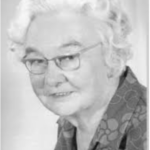
The method was developed by Katharina Schroth, a German schoolteacher who had scoliosis herself and wore a steel brace as a teenager. Dissatisfied with the limitations of bracing alone, she began experimenting with her own posture and breathing—using mirrors to observe and adjust her spinal position.
Inspired by a balloon, she tried to correct her own scoliosis by inflating the concavities of her body in front of a mirror. She also tried to mirror the deformity by overcorrecting with the help of certain pattern-specific corrective movements.
She recognized that postural control can only be achieved by changing postural perception.I often refer to the work I do with clients, which isn’t limited to scoliosis, as teaching perception.
Very few people have an accurate idea of where they are in space.
Over time, Schroth developed a systematic approach to reducing curvature through corrective breathing and postural control.
Her daughter, Christa Lehnert-Schroth, later helped refine and expand the method, making it the foundation of scoliosis treatment in several European clinics.
Today, Schroth is practiced worldwide and supported by a growing body of research, especially for adolescents with idiopathic scoliosis.
How the Schroth Method Works
The Schroth Method is based on the idea that scoliosis is a three-dimensional condition, involving not just lateral curvature, but also vertebral rotation and uneven muscle development. The goal of Schroth is to counter these imbalances through:
- Rotational angular breathing
- Postural correction
- Asymmetrical strengthening
- Neuromuscular education
Every exercise is tailored to the individual’s curve pattern, as determined by X-rays and a detailed physical assessment. Common curve types (like thoracic right or lumbar left) each have their own correction strategies.
The Power of Rotational Breathing
One of Schroth’s most distinctive elements is rotational angular breathing. Because scoliosis affects the ribcage—compressing it on one side and expanding it on the other—breath becomes lopsided.
Schroth teaches patients to direct breath into the collapsed, concave side of the ribcage, helping to:
- Expand space in restricted areas
- De-rotate the spine
- Improve lung function
- Bring greater symmetry to the torso
This kind of breathing is both a physical and neurological retraining. With consistent practice, the body learns to support a more neutral spinal position—even outside of the exercise setting.
What a Typical Session Looks Like
A Schroth session usually begins with postural education and alignment cues—often using mirrors, props, or wall bars for feedback. Patients may perform:
- Seated, standing, or lying exercises
- Isometric holds that strengthen weak muscles
- Breathing drills with visual or tactile guidance
- Psoas or pelvic corrections for balance
Because the approach is so personalized, sessions are typically one-on-one, especially in the beginning. Over time, patients are encouraged to build a daily home practice.
Schroth is often recommended for adolescents with idiopathic scoliosis (especially during growth spurts), adults with degenerative scoliosis or chronic back pain, individuals looking for a non-surgical approach to scoliosis care.
Several studies have shown that Schroth exercises can reduce curve progression in adolescents, decrease pain in adults, improve posture, lung capacity, and self-image while also enhancing the quality of life.
While it may not eliminate scoliosis altogether, Schroth empowers people to actively manage their condition—with fewer limitations and greater body awareness.
The Schroth Method isn’t just a series of exercises—it’s a philosophy of healing that sees scoliosis not as a fixed defect, but as a pattern that can be influenced and improved.
Through precise movement, conscious breath, and daily commitment, many people find a sense of control, strength, and even transformation in their spines.
Whether used alone or alongside other treatments, Schroth offers a hopeful and effective path for those living with scoliosis.
Next up: The Dobomed Method For Scoliosis