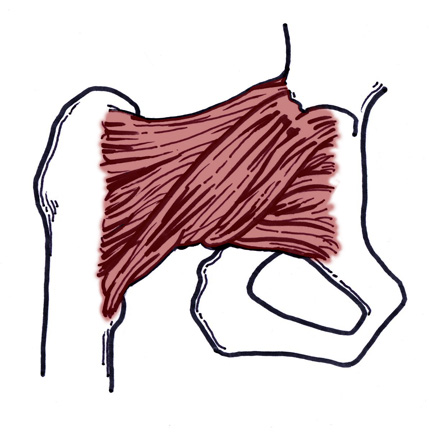
The iliofemoral ligament is considered the strongest ligament in the human body. It plays a quiet but profound role in how we stand and move.
Bones hold us up.
Muscles move us.
Ligaments hold the bones together.
For the skeleton to support us efficiently, the bones need to stack — one on top of the other — so weight can transfer cleanly through the system. But weight does not travel in a perfectly straight line from the spine to the legs. It moves through angles and arches. The junction where the femur meets the pelvis is one of the most important of these transitions.
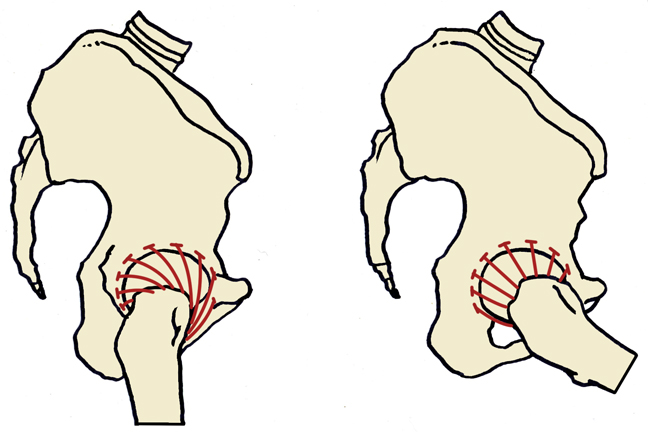
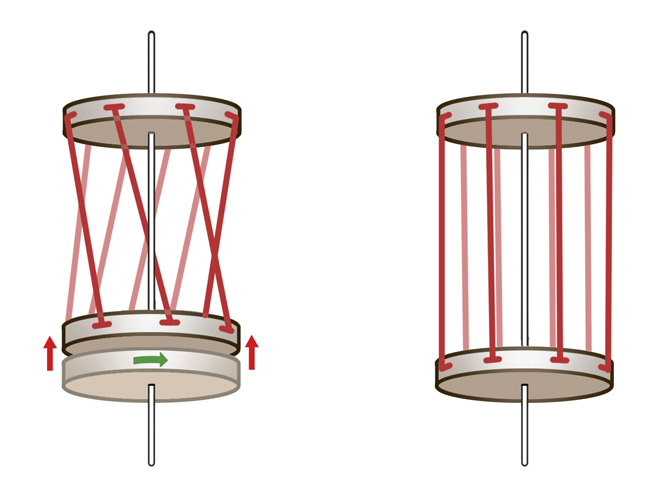
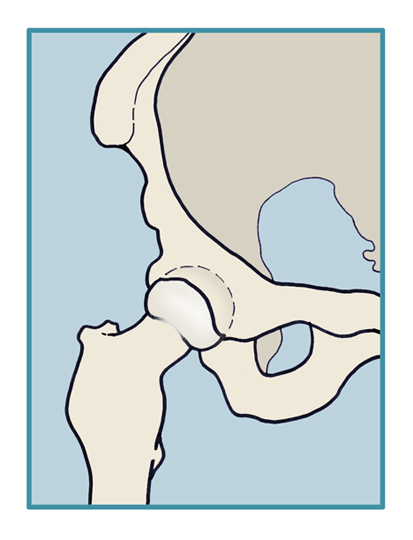
The leg does not attach to the pelvis vertically; it enters at an angle. That angled relationship requires stability. The iliofemoral ligament, located deep in the front of the hip, provides much of that stability by binding the femur securely into the pelvis.
For the bones to truly “hold us up,” the femur needs to sit directly under the pelvis — plumb to the floor. When the thigh bone is positioned well beneath the hip socket, the skeleton can bear weight with minimal muscular strain.