
 Backbending Is the Heart of Yoga
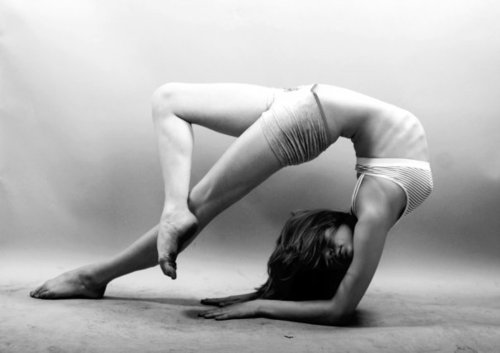
My adult yoga journey began with Ashtanga Yoga — a physically demanding system made up of six series, designed to synchronize breath and movement for roughly ninety minutes without pause. It builds enormous heat. It demands stamina. And at its best, it’s wildly fun.
In Ashtanga I was taught that the First Series builds the strength and stability necessary to prepare for the deep backbends of the Second Series. That always made intuitive sense to me.
Backbends are powerful. Energetically, they are expansive (heart-opening), stimulating, even confrontational. They expose the front body and demand courage. But without integration — especially through the core — that “opening” can quickly become collapse.
A backbend is a spinal extension.
And this is where the misunderstanding begins.
Yes, the spine extends. But it must extend through length. The extension should be supported by subtle abdominal engagement — because one of the essential functions of the abdominals is to regulate and limit spinal extension. Without that modulation, extension becomes compression.
It is all too easy to throw the front body forward and hinge into the lumbar spine. That may look impressive, but it loads the lower back in a way that is often unsustainable.
The Psoas and the Architecture of Extension
If backbending is about spinal extension, then the psoas major is central to the conversation.
The psoas is the only muscle that directly connects the legs to the lumbar spine. It originates along the sides of the lumbar vertebrae and travels through the pelvis to attach to the inner thigh. It is a bridge between spine and legs.
In a healthy backbend, the psoas must both stabilize and lengthen appropriately. If it is rigid or chronically shortened, it will tug on the lumbar spine and exaggerate compression there. If it is weak or poorly integrated, the lower back will again take too much load.
The same is true of the other key players that link limbs to spine: the piriformis, gluteus maximus, and latissimus dorsi. These muscles must work in concert to distribute extension throughout the whole body rather than concentrating it in one vulnerable segment.
Healthy backbending is not about forcing more range into the lumbar spine.
It is about organizing the entire body so that extension is shared.
When the psoas is balanced — neither gripping nor collapsing — the spine can lengthen upward and backward at the same time. That is very different from simply bending.
Backbending and the Aging Spine
As we age, the spine naturally loses hydration and elasticity. Discs thin. Facet joints stiffen. Many people respond to this by either avoiding extension altogether or by pushing aggressively into it to “stay flexible.”
Both approaches miss the point.
For an aging spine, extension is vital — but it must be intelligent.
Extension stimulates circulation to the discs and counters the forward-flexed posture that dominates modern life. It helps maintain uprightness and dignity. But the older we get, the less forgiveness the lumbar spine has for sloppy mechanics.
If the abdominals are disengaged and the psoas is tight, the lower back becomes the hinge point. Over time, that pattern can contribute to irritation, instability, or pain.
But when extension is supported — when the spine lengthens and the front body opens without collapse — backbending becomes one of the most rejuvenating things we can do.
Especially as we age.
A Simple Question in Every Backbend
In poses like Wheel, Camel, or even a gentle Cobra, students should ask:
- Are the muscles along my spine lengthening?
- Or are they gripping and shortening?
- Does this feel spacious — or compressed?
It is essential that in a backbend the muscles along the spine lengthen, while the muscles of the front body shorten in a balanced and supported way.
Backbends can be profoundly therapeutic. They can also be injurious when done without anatomical clarity.
Yoga is good for you.
But yoga practiced without awareness of how the body is designed to work can absolutely cause harm.
Backbending is not about how far you can go.
It is about how well you can organize extension, how intelligently you can involve the psoas, and how evenly you can distribute the arc of the spine.
That is where the real opening happens.